
■History of Showa Dojo
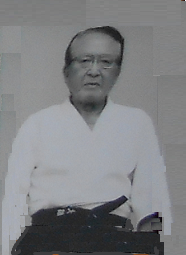
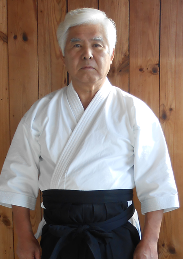

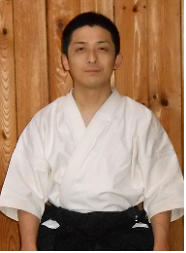
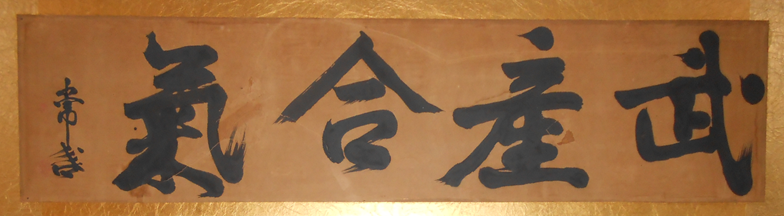
Showa Dojo is an Aikido dojo officially certified by Aikikai Founation headquartered in Tokyo. Showa Dojo enjoys a high reputation due to its history and founder. It was founded by Hideki Owaki sensei (7th dan) in 1968 as an early Nagoya branch dojo of Aikikai Hombu Dojo with the objective of seeding and cultivating Aikido in the Nagoya-Tokai area. Owaki sensei studied Aikido under O-sensei, the founder, in the 1960s and pioneered the development of Aikido in Nagoya. His Aikido is firmly based on Judo (5th dan) and Kendo (6th dan) as well as other martial arts. Practicing as a pharmacist and acupuncturist during the daytime, he trained a large number of Aikidoists in his dojo in the evening and on weekends for over 40 years. He was also active in community affairs having served as a councilman of Nagoya City for 15 years. In March 2012, he retired from the position as head of Showa Dojo at the age of 90. Starting April 2012, Dr. Makoto Ohtsu (7th dan) has taken over the position of head and chief instructor of Showa Dojo. From March 2021, Mr. Yasuto Itami, 7th Dan, assumed the position of the third head of the dojo. From April 2025, Mr. Hideki Kamezawa, 6th Dan, has assumed the position of head of the dojo.
■Location and Access to Showa Dojo
Showa Dojo is located at Komagata-cho, Showa-ku, Nagoya, about 8 minutes walking distance from Kawana Station on the Subway Tsurumai Line, and in front of Komagata Junior High School (see the map in the “Showa Dojo Map” section).
■About Dojo Floor Space
The building is a two-story structure with a wooden first floor and a tatami-laid second floor. Aikido is practiced primarily in the second floor. A dojo of 89 tatami mats boasts one of the most spacious dojos in town where students can practice without worrying about clashing into each other.
■Classes and Testing
Showa Dojo is one of the few dojos in Nagoya with its own dedicated building. The General Class is open to junior high school students and older, while the Children's Class is for elementary and junior high school students. Junior high school students may choose either class. Beginners learn basic movements such as safe falling and footwork, followed by basic techniques during their first few months. General Class members may attend any General Class session. Please see the Class Schedule for class days and times.
■Qualified Instructional Staff
The Showa Dojo instructional staff consists of highly qualified people with one 6th dan, one 5th dans, and five 4th dans. Each covers a wide range of techniques from one man open-hand attack to multiple people attack through attacks with weapons such as a knife, a sword, and a jo stick (Please see the “Instructional Staff” section for details of the instructors).
■Members
The dojo currently has 40 members in the adult section and 12 in the youth section as of September, 2026. The age range spans from the youngest at 7 years old to the oldest at 80 years old, covering a diverse range of age groups. This reflects the characteristic of Aikido, where people can start practicing even in their middle and senior years. In terms of gender distribution, the ratio is 3:1 in the adult section and 1:2 in the youth section. Despite having zero new entrants since the onset of the COVID-19 pandemic, there has been an increase in individuals taking up Aikido recently.
■Facilities and Hygiene
The dojo is equipped with an AED, and some of our staff members have completed the Nagoya City Fire Department’s basic lifesaving course.
Since July 2024, two Daikin air-conditioning units have been installed, and drinks for hydration are kept on hand.
After every training session, adult-class members clean the dojo using disposable wet cleaning sheets.
Disposable hygiene products, including paper towels in the restrooms, are also provided.